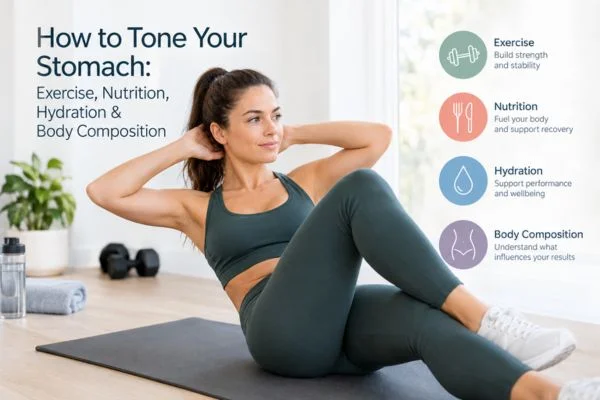
How to Tone Your Stomach: Exercise, Nutrition, Hydration & Body Composition
Many people want to improve the strength, appearance, or definition of their stomach. Whether you want stronger abdominal muscles, better core stability, or to understand how body composition affects your appearance, several factors matter.
The term “toning your stomach” usually refers to building stronger abdominal muscles and, in some cases, making existing muscle definition more visible.
However, achieving a particular stomach appearance isn’t simply about doing abdominal exercises.
Muscle strength, body fat distribution, genetics, nutrition, hydration, hormones and everyday lifestyle habits can all influence how the abdominal area looks and feels.
At Lipo 360, we provide balanced information to help you make informed decisions about your wellbeing and body goals.
In this guide, we explore the role of exercise, nutrition, hydration and body composition in abdominal strength and appearance.
What Does Toning Your Stomach Actually Mean?
Although the word “toning” is widely used in fitness and wellbeing, it is not a specific physiological process.
When people talk about toning their stomach, they are usually referring to one or both of the following:
- Strengthening and developing the abdominal muscles.
- Changing overall body composition so muscle definition becomes more noticeable.
The stomach area contains several muscle groups, including the rectus abdominis, transverse abdominis and internal and external obliques.
These muscles contribute to movement, stability, and trunk support.
Strengthening these stomach muscles can improve muscular endurance and function, though visible changes in appearance vary by individual.
Importantly, abdominal exercises do not specifically remove stomach fat.
The body generally does not choose where it loses fat based on which muscles you exercise. This is often called the myth of spot reduction.
1. Exercise and Strengthening Your Abdominal Muscles
Regular physical activity can support muscle strength, cardiovascular health and overall wellbeing.
A balanced exercise programme typically includes resistance training, cardiovascular activity, and exercises that challenge the core muscles.
Core Strengthening Exercises
Core exercises help develop the muscles that stabilise and move the trunk.
Examples include:
Planks
Planks challenge several core muscles as you maintain a supported position.
You can adapt them to your fitness level, for example by supporting yourself on your knees.
Dead Bugs
Dead bugs involve controlled arm and leg movements while keeping your trunk stable.
They often develop coordination and core control.
Bird Dogs
This exercise involves extending opposite arms and legs from a hands-and-knees position.
It can help challenge balance, coordination and trunk stability.
Modified Abdominal Crunches
Crunches primarily work the rectus abdominis muscles.
Perform them with controlled movement, and they may not suit everyone, particularly those with certain back, abdominal, or pelvic health concerns.
How Often Should You Train Your Core?
You can incorporate core exercises into a wider strength-training routine, allowing enough recovery between challenging sessions.
The NHS recommends that adults do muscle-strengthening activities at least two days a week, alongside regular aerobic activity.
The right frequency, intensity, and exercise choices depend on your experience, physical health, and individual goals.
If you are recovering from an injury, have recently given birth or experience abdominal or pelvic discomfort, seek appropriate professional guidance before beginning a new exercise programme.
2. Why Full-Body Exercise Matters
Although abdominal exercises strengthen the muscles in the stomach area, full-body activity is also important.
Resistance exercises such as squats, rows, presses, and other appropriately selected movements can help build muscle strength across the body.
Cardiovascular activities, including walking, cycling, swimming and dancing, can support heart health, fitness and energy expenditure.
Combining different activities can support general health and, depending on individual circumstances, may change body composition over time.
However, multiple factors influence body fat levels and distribution, and no single exercise can guarantee a flatter stomach.
3. Nutrition and Its Role in Body Composition
Nutrition supports health, exercise, and recovery from physical activity.
No single food, meal plan, or dietary approach will specifically tone the stomach.
Instead, a varied, balanced diet can help provide the nutrients needed for normal body function and muscle maintenance.
Protein and Muscle Maintenance
Protein supports muscle growth and maintenance.
Sources of protein include:
- Fish, poultry and lean meat
- Eggs
- Beans and lentils
- Tofu and other soya products
- Milk, yoghurt and suitable dairy alternatives
- Nuts and seeds
Protein requirements vary with factors such as age, activity levels and individual health circumstances.
People who do regular resistance training may have different nutritional needs than those who are less physically active.
Fibre and Digestive Health
Fibre supports normal digestion and can be an important part of a balanced diet.
Sources include whole grains, fruit, vegetables, pulses, nuts and seeds.
Gradually increasing fibre and maintaining appropriate fluid intake may help reduce digestive discomfort from sudden dietary changes.
Why Restrictive Dieting Is Not Necessary
Very restrictive diets or rapid weight-loss approaches can be hard to maintain and may lead to inadequate nutrient intake.
For most people, sustainable eating habits are better than trying to achieve rapid changes in abdominal appearance.
Anyone with specific nutritional needs or a medical condition should seek personalised advice from a suitably qualified healthcare professional.
4. Does Hydration Help Tone Your Stomach?
Hydration is essential for normal bodily function, including temperature regulation, digestion and physical performance.
However, drinking more water does not directly burn abdominal fat or create muscle definition.
Maintaining adequate hydration can support exercise performance and general wellbeing.
The NHS generally recommends aiming for around six to eight glasses or cups of fluid each day, although individual needs vary depending on activity, temperature and health circumstances.
Water, low-fat milk, and sugar-free drinks, including tea and coffee, can contribute to fluid intake.
Hydration and Bloating
Some people notice that their stomach appearance changes throughout the day.
This may relate to normal digestive processes, food intake, gas, bowel habits, or temporary bloating.
Hydration can support normal bowel function, but it doesn’t guarantee bloating relief.
Discuss persistent, unexplained, or worsening bloating with an appropriate healthcare professional rather than assuming it’s a cosmetic concern.
5. Understanding Body Composition
Body composition refers to the different components that make up body weight, including fat mass, muscle, bone and water.
Two people of similar height and weight may have different body compositions and, therefore, different physical appearances.
Abdominal muscle definition depends on both muscle development and the amount and distribution of fat tissue.
Factors That Influence Abdominal Appearance
Genetics
Genetics influence natural body shape, muscle characteristics, and fat distribution patterns.
Age
Muscle mass and body composition can change with age.
Hormones
Hormonal changes, including those associated with menopause, can influence body fat distribution in some individuals.
Activity Levels
Physical activity can support muscle maintenance, strength and overall health.
Sleep and Recovery
Adequate sleep supports general health, physical recovery and normal bodily function.
Individual Anatomy
Posture, abdominal wall structure, skin elasticity and previous pregnancies can also influence the appearance of the stomach.
These differences are normal, and not everyone will develop the same degree of visible abdominal definition.
6. Can You Target Stomach Fat Through Exercise?
A common misconception is that repeatedly exercising one part of the body will make fat disappear from that area.
This is known as spot reduction.
Although abdominal exercises can strengthen the underlying muscles, they do not reliably produce localised fat loss.
Overall fat loss depends on a combination of factors, including energy balance, activity, nutrition, genetics, and individual physiology.
For people who want to change their body composition, a balanced, sustainable approach is generally better than focusing exclusively on the stomach.
It is also important to recognise that having visible abdominal fat is normal and does not, by itself, indicate poor health.
7. The Importance of Sleep, Stress and Recovery
Exercise and nutrition aren’t the only considerations when building a sustainable fitness routine.
Rest and recovery support physical performance and muscular adaptation.
Sleep
Adults generally need about seven to nine hours of sleep each night, though needs vary.
Insufficient sleep may affect energy levels, exercise performance, and appetite regulation.
Stress
Stress can influence sleep, eating patterns and motivation for physical activity.
Managing stress through suitable activities, such as walking, relaxation exercises or spending time outdoors, may support general wellbeing.
Recovery
Muscles need time to recover following demanding exercise.
Gradually increasing exercise intensity and including appropriate rest can help reduce the likelihood of overtraining and unnecessary discomfort.
8. What About Loose Skin or Changes Following Pregnancy?
Not all changes in abdominal appearance are related to muscle strength or body fat.
Some people experience changes in skin elasticity, abdominal wall structure, or muscle separation after pregnancy, significant weight changes, or ageing.
For example, diastasis recti involves separation of the rectus abdominis muscles along the abdominal wall’s connective tissue.
This is different from simply having weak abdominal muscles or excess abdominal fat.
A qualified physiotherapist or other appropriate healthcare professional can assess abdominal wall concerns and recommend suitable management.
Exercise programmes should be adapted to individual circumstances, particularly following pregnancy or abdominal surgery.
Cosmetic body-contouring treatments should not be presented as treatments for abdominal muscle separation or other underlying medical conditions.
9. Can Non-Surgical Body Contouring Complement a Healthy Lifestyle?
Some individuals explore non-surgical body-contouring treatments when considering the appearance of particular areas of their body.
These treatments differ from exercise, nutrition, and general weight management.
At Lipo 360, we offer consultation-led information on selected non-surgical body-contouring options, including cryolipolysis and, where appropriate, muscle stimulation.
Cryolipolysis (Fat Freezing)
Fat Freezing is a non-surgical cosmetic procedure that uses controlled cooling to target selected areas of subcutaneous fat.
It is intended for localised fat reduction, not general weight loss.
The stomach is one area that may be considered, depending on individual suitability.
Cryolipolysis does not strengthen abdominal muscles, improve cardiovascular fitness or replace healthy lifestyle habits.
Potential side effects include temporary redness, swelling, bruising, tenderness and altered sensation. Less commonly, paradoxical adipose hyperplasia can occur, where the treated fatty tissue increases rather than decreases.
Results vary, and treatment is not suitable for everyone.
High-Intensity Electromagnetic Muscle Stimulation
Certain electromagnetic muscle-stimulation technologies are designed to produce repeated muscle contractions.
These treatments may be marketed for muscle conditioning or cosmetic body-contouring purposes.
However, evidence for meaningful, lasting improvements in abdominal appearance and muscle strength varies by device and treatment protocol.
They should not be regarded as equivalent to a comprehensive exercise programme or as a substitute for rehabilitation, physiotherapy or medical treatment.
Assess suitability individually, particularly if medical implants, pregnancy, recent surgery, or relevant health conditions are involved.
Is Body Contouring Suitable for Everyone?
No. Non-surgical body-contouring treatments aren’t appropriate for everyone; suitability depends on medical history, the treatment area, individual expectations, and other relevant factors.
At Lipo 360, we discuss treatment options during consultation, and we do not guarantee specific aesthetic outcomes.
If symptoms or concerns suggest an underlying medical issue, prioritise appropriate healthcare assessment over cosmetic treatment.
Related Lipo 360 services:
- Cryolipolysis / Fat Freezing
- HIEMT Muscle Toning
- Non-Surgical Body Sculpting
10. Setting Realistic Expectations
When considering abdominal strength or appearance, focus on achievable, individual goals.
These might include:
- Developing better core strength and endurance.
- Becoming more physically active.
- Improving confidence with exercise.
- Maintaining balanced nutritional habits.
- Supporting general physical health.
- Understanding your natural body composition.
Changes in appearance take time and aren’t always predictable.
Remember that abdominal shape varies naturally from person to person.
A perfectly flat stomach isn’t required for physical fitness or good health.
Frequently Asked Questions
What is the best exercise to tone your stomach?
There is no single best exercise for everyone. Planks, dead bugs, bird dogs, and other well-chosen core exercises can help strengthen abdominal muscles. A balanced routine that includes full-body resistance training and aerobic activity is generally beneficial.
Can I tone my stomach without losing weight?
You can strengthen your abdominal muscles without losing weight. Muscle development can change appearance, but visible definition also depends on individual body composition and anatomy.
Do sit-ups burn stomach fat?
Sit-ups work the abdominal muscles but don’t specifically burn stomach fat. Fat distribution and changes in overall fat mass depend on several factors.
Does drinking water help flatten your stomach?
Adequate hydration supports normal bodily function and digestion, but water doesn’t directly reduce abdominal fat or guarantee a flatter stomach.
How long does it take to tone your stomach?
There is no universal timeframe. Consistent training can improve strength and endurance, but visible changes in abdominal appearance vary widely between individuals.
Can menopause affect stomach fat?
Hormonal changes during menopause can influence body fat distribution, and some individuals notice changes around the abdomen. Genetics, ageing and lifestyle factors also contribute.
Can fat freezing help with stomach fat?
Cryolipolysis targets selected areas of subcutaneous fat through controlled cooling. It is not a weight-loss treatment and does not strengthen abdominal muscles. Discuss suitability and potential outcomes during consultation.
Is muscle stimulation the same as exercising?
No. Electromagnetic muscle stimulation produces involuntary muscle contractions, but it doesn’t provide the broader cardiovascular, metabolic, and functional benefits associated with regular physical activity.
A Balanced Approach to Abdominal Strength and Body Confidence
Toning your stomach takes more than just doing abdominal exercises.
Building core strength, maintaining a balanced diet, staying hydrated, and allowing time to recover can all support physical well-being.
Body composition, genetics, hormones, and individual anatomy also influence abdominal appearance, so results and expectations will vary from person to person.
For those considering non-surgical body-contouring options, understanding each treatment’s limitations, potential risks, and suitability is essential.
At Lipo 360, we aim to provide clear information to help individuals make informed decisions about the options available to them.
Speak to Lipo 360 About Your Options
If you are considering non-surgical body contouring, our team can discuss the treatments we offer, explain their potential limitations, and help you decide whether a consultation is appropriate.
Our mobile treatment services are available in selected UK locations, subject to practitioner availability and individual suitability.
Important information: This article is intended for general information only and does not replace personalised medical, nutritional or physiotherapy advice. Cosmetic treatments carry risks, may not suit everyone, and cannot guarantee specific results.