Fat Freezing Explained: How Cryolipolysis Works, Benefits & What Happens to Fat Cells
Fat freezing, also known as cryolipolysis, is a non-surgical cosmetic treatment that uses controlled cooling to target localised areas of subcutaneous fat.
For people researching non-surgical body contouring, understanding how fat freezing works, what happens to treated fat cells, and what results to expect realistically is an important part of making an informed decision.
Although cryolipolysis is often discussed as an alternative to surgical fat reduction, the two approaches differ. Fat freezing is not a weight-loss treatment, and it cannot guarantee a particular reduction in fat or change in body shape.
In this guide, we explain the science behind cryolipolysis, its potential benefits, possible side effects and the factors that may influence treatment suitability.
At Lipo 360, we offer consultation-led, non-surgical body contouring treatments in selected UK locations, with individual suitability assessments before treatment.
What Is Fat Freezing?
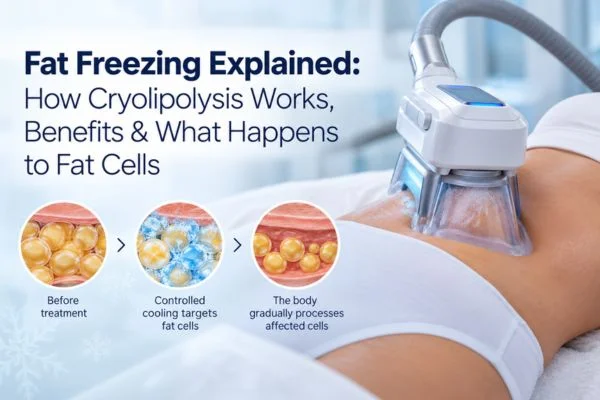
Fat freezing is the commonly used name for cryolipolysis, a cosmetic procedure that uses controlled cooling to target fatty tissue beneath the skin.
The treatment is based on the principle that fat cells are more susceptible to certain cooling conditions than surrounding tissues.
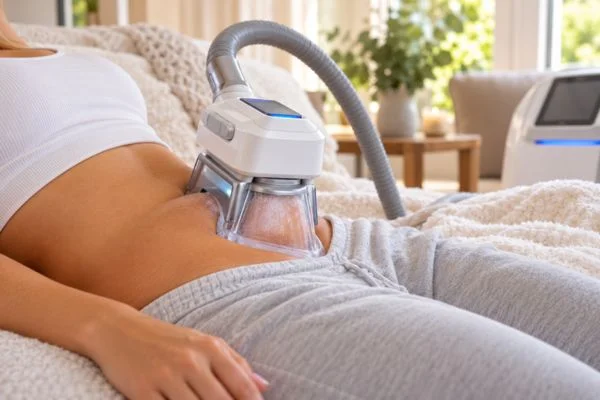
During cryolipolysis, a specialised applicator delivers controlled cooling to a selected treatment area. Depending on the equipment used, the applicator may also use suction to draw a fold of tissue into the treatment cup.
The aim is to cause cold-induced injury to some fat cells within the treated area.
Over the following weeks and months, the body may gradually process and clear some of these affected cells.
Cryolipolysis is intended for localised fat reduction and body contouring, not overall weight management.
Fat freezing does not treat obesity, replace a balanced lifestyle, or guarantee visible results.
How Does Cryolipolysis Work?
Cryolipolysis uses a controlled cooling process to target fat cells in a selected area.
The process occurs in several stages.
1. Controlled Cooling Is Applied
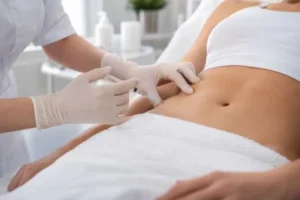
After an individual assessment, the practitioner positions a suitable applicator over the treatment area.
The device delivers cooling based on its settings and the manufacturer’s instructions.
Some devices use vacuum suction to hold the tissue in position, while others may use different applicator designs.
2. Fat Cells Respond to Cooling
Fat cells contain lipids that respond to temperature changes.
Under suitable conditions, controlled cooling can trigger injury and biological changes in some exposed fat cells.
These changes may initiate programmed cell death (apoptosis), although the precise biological response can involve several mechanisms.
3. The Body Responds to Affected Cells
Following treatment, the body’s inflammatory and immune responses may help process the affected fat cells.
Immune cells, including macrophages, help clear cellular material from the treated tissue.
This process occurs gradually rather than immediately.
4. Changes May Develop Over Time
As the body processes affected fat cells, the treated fatty tissue may thin.
However, the extent of any reduction varies from person to person.
Some people may notice a change in the treated area, while others may see less change or no noticeable cosmetic improvement.
The treatment does not guarantee a particular outcome.
What Happens to Fat Cells After Fat Freezing?
One of the most common questions about cryolipolysis is what happens to fat cells after controlled cooling.
Unlike liposuction, which physically removes fatty tissue during surgery, cryolipolysis relies on the body’s biological response following treatment.
When cooling sufficiently affects fat cells, they may undergo cellular changes that lead to their gradual breakdown.
Over the following weeks, the body processes the affected cellular material through its normal immune and metabolic processes.
This does not mean that all fat cells within the treated area are destroyed.
It also does not mean that the body immediately releases large quantities of fat into the bloodstream.
Research into cryolipolysis has examined its effects on circulating blood lipids and liver function. Still, findings from specific studies should not be interpreted as proof that every device or treatment protocol is risk-free.
Are Fat Cells Permanently Removed?
Cryolipolysis may reduce the number of fat cells in a successfully treated area.
However, this does not guarantee permanent cosmetic results.
Remaining fat cells can still enlarge if a person gains weight, and body composition can change over time.
Ageing, hormonal changes, lifestyle and weight fluctuations may also influence the appearance of treated areas.
What Are the Potential Benefits of Fat Freezing?
Cryolipolysis may appeal to people exploring non-surgical body contouring options.
Potential advantages include:
Non-Surgical Approach
Cryolipolysis does not require surgical incisions or the physical removal of fatty tissue through liposuction.
However, being non-surgical does not mean that treatment is free from risks or complications.
No General Anaesthetic Typically Required
Cryolipolysis is generally performed without general anaesthesia.
The treatment area may feel intensely cold, and some people experience pulling, pressure, aching or discomfort during the procedure.
Targeted Treatment Areas
Cryolipolysis targets selected areas of subcutaneous fat rather than producing overall weight loss.
Treatment suitability depends on the location, amount, and characteristics of the fatty tissue, as well as the individual’s health and the device used.
Limited Interruption to Daily Activities for Some People
Many people can return to their usual activities relatively soon after treatment.
However, temporary discomfort, swelling, bruising or sensitivity may affect activities, and recovery experiences differ.
Gradual Changes
Any reduction in fatty tissue generally develops gradually rather than immediately.
Some people prefer this approach, although gradual changes can also make results difficult to assess.
These are potential characteristics of the procedure, not guaranteed benefits for every individual.
Which Areas Can Be Considered for Fat Freezing?
Cryolipolysis is commonly discussed for localised areas of subcutaneous fat, including:
- Abdomen
- Flanks or sides of the waist
- Thighs
- Upper arms
- Back
- Areas around the bra line
Not every device is approved, cleared or designed for every body area.
At Lipo 360, we consider treatment areas individually during consultation, and availability depends on the equipment used, practitioner assessment, and treatment suitability.
Fat freezing is not designed to address all causes of changes in body shape.
For example, loose skin, muscle separation, visceral fat and certain medical conditions require different considerations.
How Long Does Fat Freezing Take to Work?
Cryolipolysis usually does not produce an immediate, visible reduction in fatty tissue.
Following treatment, the body’s response to affected fat cells develops over time.
Some studies report measurable changes within about six to twelve weeks, with further changes sometimes assessed over subsequent months.
However, these timeframes do not guarantee when an individual will notice results.
The response may depend on several factors, including:
- The treatment area
- The device and treatment protocol
- Individual body composition
- The amount and distribution of subcutaneous fat
- Individual biological responses
- Changes in weight over time
Some people may not notice improvement.
A consultation should set realistic expectations and explain the treatment’s limitations.
Is Fat Freezing the Same as Weight Loss?
No. Fat freezing and weight loss are not the same.
Weight loss generally involves changes in overall body mass, including fat, muscle, and fluid.
Cryolipolysis targets selected deposits of subcutaneous fat in specific areas.
It is not designed to produce substantial weight reduction, improve cardiovascular fitness or treat obesity.
It should not be presented as a replacement for healthy eating, regular physical activity or appropriate medical weight-management support.
If your primary concern is overall weight management, a healthcare professional can advise on suitable evidence-based options.
Does Fat Freezing Tighten Loose Skin?
Cryolipolysis primarily targets subcutaneous fatty tissue.
It should not be assumed to tighten loose skin or correct skin laxity.
In some cases, reducing fatty tissue volume may make existing skin laxity more noticeable.
Skin elasticity varies with age, genetics, weight changes and other factors.
If loose skin is your main concern, a consultation can help distinguish this from localised fat and discuss whether another approach may be more appropriate.
Is Fat Freezing Painful?
Experiences vary.
During treatment, some people report sensations such as:
- Intense cold
- Pulling or suction
- Pressure
- Tingling
- Aching or discomfort
- Temporary numbness
After treatment, the area may feel tender, swollen, bruised or sensitive.
These effects often improve over time, although some people experience prolonged discomfort or altered sensation.
An appropriate healthcare professional should assess any severe, persistent or unexpected symptoms.
What Are the Risks and Side Effects of Cryolipolysis?
Although cryolipolysis is non-surgical, it is not risk-free.
Potential side effects and complications include:
- Temporary redness, bruising or swelling
- Tenderness, aching or discomfort
- Numbness, tingling or altered sensation
- Skin sensitivity
- Temporary firmness or lumpiness
- Uneven contour or asymmetry
- Persistent pain or sensory changes
- Cold-related skin injury, including burns or blistering
- Changes in skin pigmentation
- Less commonly, other tissue or nerve-related complications
Paradoxical Adipose Hyperplasia (PAH)
A particularly important potential complication is paradoxical adipose hyperplasia (PAH).
This recognised complication occurs when the treated fatty tissue enlarges rather than reduces.
The area may become firmer or develop a visible bulge shaped like the treatment applicator.
PAH may become apparent months after treatment and does not typically resolve simply through further fat freezing.
Some cases may require corrective surgery.
Published estimates of how frequently PAH occurs vary, and the risk should be discussed before treatment.
Although PAH is considered uncommon, it is an important part of informed consent.
Who May Not Be Suitable for Cryolipolysis?
Fat freezing is not appropriate for everyone.
A full consultation should include a review of relevant medical history, current health, medications, and an assessment of the proposed treatment area.
Cryolipolysis may be unsuitable for individuals with certain conditions, including:
- Cryoglobulinaemia
- Cold agglutinin disease
- Paroxysmal cold haemoglobinuria
- Certain other cold-sensitivity disorders
- Reduced sensation or circulation in the proposed treatment area
- Certain skin conditions, injuries or infections affecting the area
Additional precautions may apply for people with hernias, previous surgery, implanted medical devices or other relevant health conditions.
Treatment during pregnancy or breastfeeding is generally avoided because safety has not been adequately established.
Precise contraindications depend on the device, treatment protocol, and individual circumstances.
At Lipo 360, we assess suitability on an individual basis. Where there is uncertainty, treatment may be declined or deferred pending appropriate medical advice.
What Happens During a Fat Freezing Consultation?
At Lipo 360, the consultation process helps individuals understand the procedure before deciding whether to proceed.
During a consultation, the team may discuss:
Your concerns and expectations
Which area you want to address and whether cryolipolysis is an appropriate option.
Your medical history
Relevant health conditions, medications, and possible contraindications.
Treatment suitability
Potential risks and limitations
Explaining possible side effects, complications, realistic expectations and the possibility of little or no visible improvement.
Considering whether the proposed treatment area suits the available equipment and treatment approach.
Alternative options
Discussing whether a different cosmetic approach or medical assessment may be more appropriate.
A consultation does not guarantee that treatment will be offered.
How Many Fat Freezing Sessions Are Needed?
No single treatment schedule suits everyone.
The number of sessions considered may depend on the treatment area, equipment, individual response and cosmetic goals.
Some people may consider further treatment following reassessment, while others may not be suitable for additional sessions.
Multiple sessions do not guarantee improved results.
Consider further treatment only after an appropriate review of the previous response and possible complications.
Fat Freezing vs Liposuction: What’s the Difference?
Although both procedures may be discussed in relation to body contouring, cryolipolysis and liposuction are different.
Fat Freezing
Cryolipolysis is a non-surgical treatment that uses controlled cooling to target fat cells in a selected area.
Any visible change generally develops gradually, and results can be modest or absent.
Liposuction
Liposuction is a surgical procedure that physically removes fatty tissue.
It involves different clinical considerations, anaesthetic requirements, recovery expectations and surgical risks.
Neither procedure should be considered a substitute for appropriate weight management or medical care.
Anyone considering liposuction should seek advice from a suitably qualified medical professional.
Can Fat Return After Fat Freezing?
Changes in the treated area may persist, but cryolipolysis does not prevent future weight gain.
Remaining fat cells can increase in size, and untreated areas of the body may also change.
Factors such as ageing, hormonal changes, medication, lifestyle and weight fluctuations may influence body composition.
For this reason, fat freezing is not a permanent solution for unwanted body fat.
Is Fat Freezing Right for You?
Whether cryolipolysis is right for you depends on your individual circumstances.
Some adults may consider it if they’re concerned about specific areas of subcutaneous fat and understand the procedure is intended for cosmetic contouring rather than weight loss.
However, treatment may not be suitable if your concerns primarily involve loose skin, abdominal muscle separation, visceral fat or an underlying medical condition.
It is also important to have realistic expectations about the possibility of limited or no visible improvement.
A consultation gives you a chance to ask questions and decide whether treatment is appropriate.
Fat Freezing at Lipo 360
At Lipo 360, we provide consultation-led, non-surgical body contouring services in selected locations across the UK.
Our approach focuses on helping individuals understand their options, the potential limitations of treatment, and what suits each individual.
We do not promise a specific reduction in fat, guaranteed body measurements or permanent results.
Cryolipolysis isn’t suitable for everyone, so make treatment decisions after an appropriate assessment.
If you are considering fat freezing, our team can discuss the treatment process, potential risks and whether it may be an appropriate option for your concerns.
Frequently Asked Questions About Fat Freezing
Does fat freezing actually destroy fat cells?
Cryolipolysis can cause cold-induced injury to a proportion of fat cells in a treated area. Some affected cells may then undergo biological processes that lead to their clearance. The amount of tissue reduction varies, and not everyone experiences visible results.
Where does the fat go after cryolipolysis?
The body gradually processes affected fat cells through its normal inflammatory, immune, and metabolic mechanisms. This happens over weeks and months, not immediately.
Can fat freezing help me lose weight?
Fat freezing is not intended for overall weight loss or obesity treatment. It is a cosmetic body-contouring procedure that targets selected areas of subcutaneous fat.
How long do fat freezing results last?
Any reduction in affected fat cells may persist, but future weight changes and other factors can alter the appearance of the treated area. We can’t guarantee long-term cosmetic results.
Is fat freezing safe?
Lipo 360 Cryolipolysis is a non-surgical fat-reduction procedure, but it carries risks, including discomfort, sensory changes, skin injury, contour irregularities, and paradoxical adipose hyperplasia. Assessing suitability and obtaining informed consent are essential.
Can fat freezing damage surrounding tissue?
Yes. Although the technology is designed to affect fatty tissue preferentially, it can also affect surrounding skin, nerves, and other tissues. Cold injury and other complications are possible.
Can I have fat freezing if I have a medical condition?
This depends on the condition, treatment area and device. Certain cold-related disorders are contraindications, while other health conditions may require additional precautions or medical advice.
Is fat freezing suitable after pregnancy?
Suitability depends on individual recovery, medical history and the cause of any changes in abdominal shape. Abdominal muscle separation, loose skin and localised fat are different concerns. Treatment is generally avoided during pregnancy and breastfeeding.
Can fat freezing remove belly fat?
Cryolipolysis may be considered for suitable subcutaneous fat deposits around the abdomen. It does not target visceral fat surrounding internal organs, and it cannot guarantee a reduction in abdominal size.
How do I find out whether I am suitable?
The first step is an individual consultation to discuss your concerns, relevant medical history, potential risks and treatment expectations.
Speak to the Lipo 360 Team
If you would like to learn more about cryolipolysis and whether it may be appropriate for you, contact Lipo 360 to arrange a consultation.
Our team can explain the available options and help you make an informed decision without pressure or guaranteed-result claims.